
When it comes to producing precision metal parts, Aluminum Die Casting and Zinc Die Casting are two of the most trusted methods used across various industries. Both processes involve injecting molten metal into a steel mold or die under high pressure to create intricate and dimensionally accurate components. However, the performance, properties, and cost-efficiency of aluminum and zinc differ significantly.
Understanding the differences between aluminum and zinc die casting is critical when choosing the right material and process for your product design and industrial needs. In this article, we break down the key differences to help you make an informed decision.
Aluminum Die Casting uses lightweight aluminum alloys that are ideal for high-strength applications where weight reduction is essential. These alloys are commonly used in the automotive, aerospace, and electronics industries due to their high corrosion resistance and excellent thermal conductivity.
Zinc Die Casting, on the other hand, utilizes zinc alloys such as Zamak 3 and Zamak 5. Zinc is known for its superior dimensional accuracy, toughness, and the ability to create highly detailed components. Zinc Die Casting Manufacturers in India often prefer zinc for smaller, more intricate parts used in electronics, home hardware, and industrial components.
One of the most noticeable differences between these two materials is their weight.
In terms of strength, both materials perform well, but in different ways. Aluminum offers excellent tensile strength, especially at higher temperatures. Zinc offers high impact strength and is more malleable, which helps in complex molding and reduces the risk of cracking during casting.
Zinc Die Casting excels in producing parts with tight tolerances, thin walls, and fine details. The lower melting point of zinc (~420°C) allows for better flow into intricate mold designs, resulting in less need for secondary machining.
Aluminum Die Casting also produces precise components, but it may require additional post-processing to achieve the same level of detail and surface finish as zinc. This makes zinc more suitable for components where finish quality and dimensional precision are top priorities.
Aluminum is naturally resistant to corrosion due to the formation of an oxide layer on its surface. This makes Aluminum Die Casting ideal for outdoor or marine applications, as well as for parts that need to withstand high-temperature environments.
Zinc also provides good corrosion resistance, especially when coated or plated. However, zinc has a lower melting point, which limits its application in high-heat conditions compared to aluminum.
Cost is often a determining factor in material choice. While Aluminum Die Casting offers performance advantages in certain applications, it typically requires higher energy consumption and shorter tool life due to the elevated temperatures used in the process.
In contrast, Zinc Die Casting offers longer die life, faster cycle times, and lower overall production costs, making it a preferred option for high-volume manufacturing.
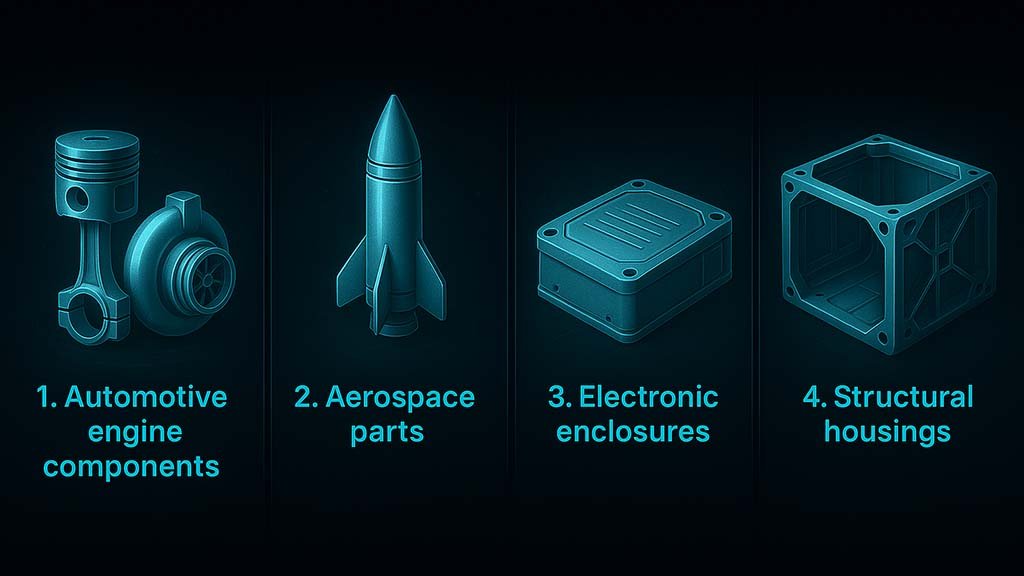
Aluminum Die Casting is commonly used for:
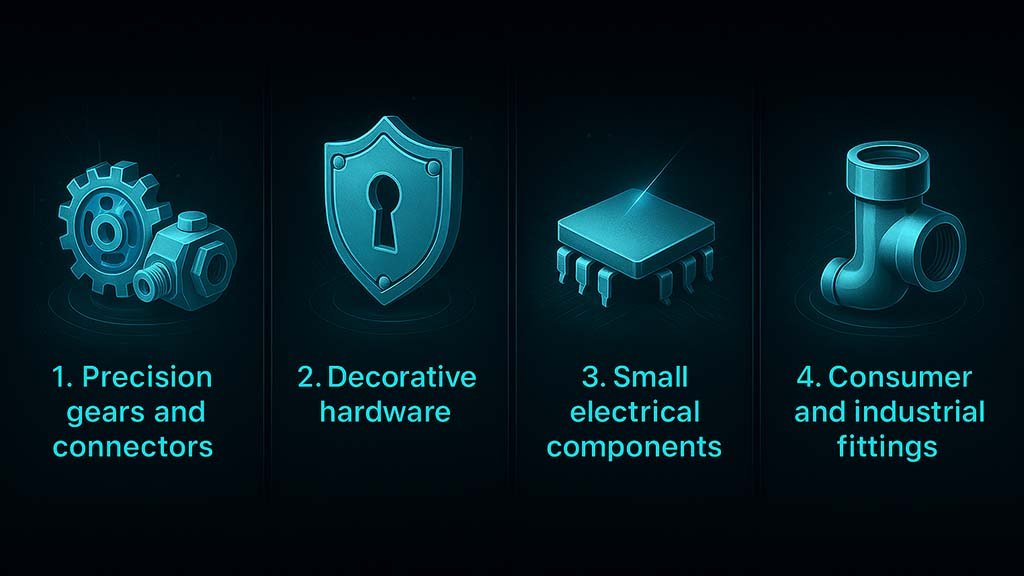
Zinc Die Casting is ideal for:
Both Aluminum Die Casting and Zinc Die Casting offer unique advantages that suit different industrial needs. When evaluating which to choose, consider factors such as part size, mechanical requirements, production volume, and budget.
For intricate, small, and cost-efficient parts, Zinc Die Casting is the way to go—especially when working with leading Zinc Die Casting Manufacturers in India. For lightweight, high-strength, and heat-resistant components, Aluminum Die Casting is the superior option.
Looking for a trusted partner for your casting needs? OME Verma Industries, a Leading Aluminium Die Casting Manufacturer in India, delivers high-quality solutions with precision engineering, advanced technology, and industry-proven expertise.
In the world of modern manufacturing, efficiency, precision, and cost-effectiveness are key factors when choosing the right production method. One such process that continues to gain popularity across industries is aluminium die casting. From automotive and aerospace to electronics and consumer goods, this method is widely adopted for its ability to produce complex, high-strength components at scale.
But is aluminium die casting the right fit for your specific manufacturing needs? In this blog, we’ll explore what makes this process so effective, its advantages, and how working with experienced aluminium die casting manufacturers can elevate your production capabilities.
Aluminium die casting is a process in which molten aluminium is injected into a steel mold — called a die — under high pressure. The metal then cools and solidifies to form a part that mirrors the exact shape of the mold cavity. Once cooled, the part is ejected, trimmed, and finished as needed.
This method is known for its ability to produce complex, highly detailed, and dimensionally accurate components with smooth surface finishes. Die casting manufacturers prefer this technique for high-volume production where consistency, speed, and strength are essential.
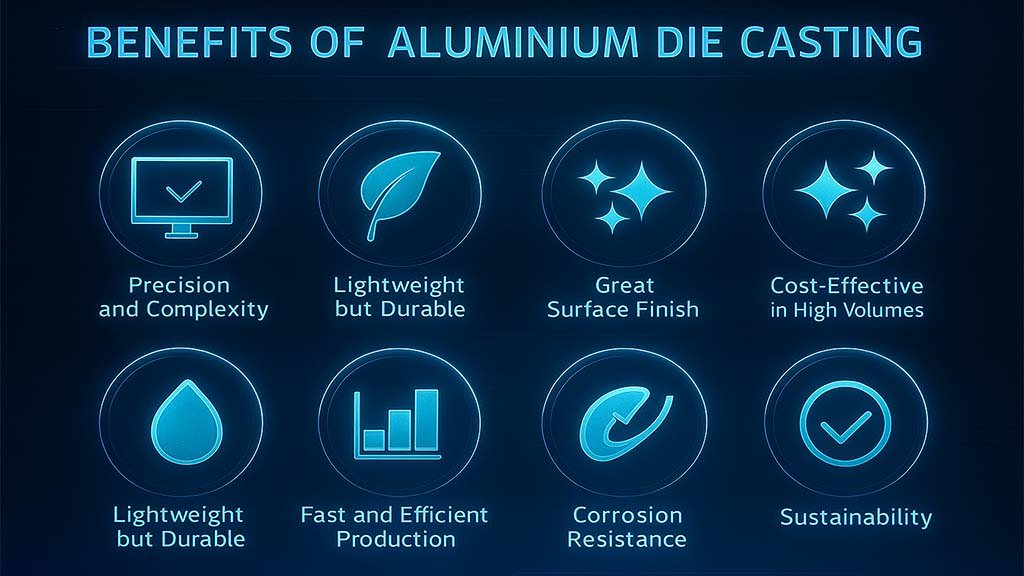
If you’re evaluating whether aluminium die casting fits your manufacturing goals, consider the many benefits it offers:
One of the biggest advantages of aluminium die casting is its ability to create intricate shapes with tight tolerances. It’s especially useful for parts that require fine details, thin walls, or internal features that would be difficult to achieve with other methods.
Aluminium is significantly lighter than steel or iron but still provides excellent strength and rigidity. This makes it ideal for industries like automotive and aerospace, where weight reduction improves performance and fuel efficiency without sacrificing durability.
Once the die is created, the casting process can produce thousands of identical parts quickly. This makes it highly efficient for large-scale manufacturing. The fast cycle times help reduce lead times and ensure quicker deliveries to market.
Parts produced by aluminium die casting usually have a smooth and clean surface, often requiring minimal finishing work. This is particularly important for visible components or those requiring painting, powder coating, or anodizing.
Aluminium forms a natural oxide layer that protects the metal from corrosion. This makes die-cast aluminium parts suitable for applications in humid, wet, or chemically exposed environments.
While the initial investment in tooling can be significant, aluminium die casting becomes increasingly cost-effective in high-volume production. The low per-unit cost, minimal material waste, and reduced need for secondary operations make it an economically sound choice.
Aluminium is 100% recyclable, and many aluminium die casting manufacturers use recycled aluminium in their operations. This makes the process more environmentally friendly while also helping to lower production costs.
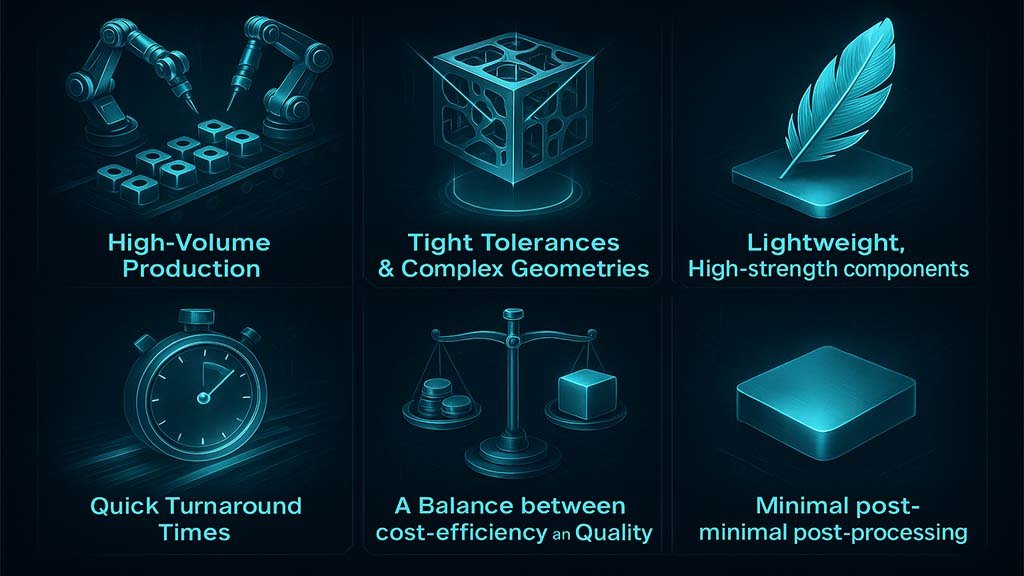
Aluminium die casting is ideal if your business requires:
However, if you’re producing very low quantities or oversized components, other processes like CNC machining or sand casting might be more appropriate.
Before deciding, it’s crucial to consult with experienced die casting manufacturers who can evaluate your project requirements and recommend the best approach based on design, volume, and budget.
Choosing the right manufacturing partner is just as important as choosing the process. A skilled and experienced die casting manufacturer can help optimize your part designs, reduce costs, and improve overall product quality.
OME Verma Industries is one of the top aluminium die casting manufacturers in India, known for delivering high-quality die cast components across various sectors. With advanced facilities, cutting-edge machinery, and a commitment to precision, OME Verma Industries ensures your manufacturing goals are met efficiently and reliably.
If you’re considering aluminium die casting for your next project, reach out to OME Verma Industries — where innovation meets precision in every cast.
In the world of metal casting, Aluminum Die Casting and Zinc Die Casting stand out as two of the most widely used methods for producing precision parts with complex geometries. Each method has its unique advantages and limitations, making it crucial for manufacturers and designers to understand the core differences when selecting the right material and process for their application.
This article explores the pros, cons, and key differences between aluminum and zinc die casting, helping you make an informed choice for your manufacturing needs.
Aluminum Die Casting is ideal for applications requiring lightweight and high-performance components. Aluminum alloys such as A380 are frequently used for their excellent strength-to-weight ratio.


Zinc Die Casting is preferred for components that require high precision, intricate detail, and strength at thinner walls. Zinc alloys like Zamak 3 and Zamak 5 are commonly used in consumer electronics, automotive interiors, and industrial equipment.


The selection between Zinc Die Casting and Aluminum Die Casting largely depends on the specific application requirements:
For high-quality Zinc Die Casting and Aluminum Die Casting solutions, partnering with an experienced manufacturer ensures the best results. OME Verma Industries, a leading Aluminium Die Casting Manufacturer in India, delivers precision-engineered parts tailored to your needs with modern technology and quality assurance at every stage.
Zinc die casting is a widely adopted manufacturing process that plays a crucial role in producing high-quality, durable metal parts across numerous industries. Known for its precision, strength, and efficiency, this method is extensively used in automotive, electronics, consumer appliances, and more. With growing demand for complex components and fast production cycles, Zinc Die Casting Manufacturers in India are increasingly delivering world-class solutions that meet global standards. In this article, we’ll explore how zinc die casting works and its vital contribution to modern industry.
Zinc die casting is a metal casting process that involves forcing molten zinc alloys into high-precision steel molds, known as dies, under high pressure. These dies are designed to produce parts with complex geometries and tight tolerances. Once the metal cools and solidifies, the mold opens and ejects the finished part, which often requires minimal machining or finishing.
Zinc alloys like Zamak 3, Zamak 5, and ZA-8 are preferred for their excellent fluidity, corrosion resistance, and mechanical strength—qualities that make them ideal for high-performance components.
Understanding how zinc die casting works involves examining a series of carefully controlled steps. Here’s a breakdown of the process:
The die (mold) is first cleaned, preheated, and lubricated. Preheating ensures even metal flow and reduces thermal shock, while lubrication helps with part ejection and increases mold life.
Molten zinc alloy, heated to a temperature around 400–450°C, is injected into the mold cavity at high pressure (usually between 1,500 and 30,000 psi). This pressure forces the metal into every detail of the mold, filling intricate designs and thin walls with precision.
Once the cavity is filled, the molten zinc quickly cools and solidifies into the desired shape. Zinc’s fast cooling rate contributes to shorter cycle times, which boosts manufacturing efficiency.
After solidification, the die opens, and ejector pins push the part out of the mold. The cycle then repeats for the next part, making zinc die casting ideal for high-volume production.
Excess material, known as flash, is trimmed off, and parts may undergo surface treatments like plating, painting, or powder coating to enhance their appearance and performance.

Zinc die casting offers a powerful combination of qualities that make it indispensable in modern manufacturing. Here’s why many industries choose it:
Zinc die casting supports intricate detailing, thin walls, and tight tolerances—perfect for electronic connectors, mechanical gears, and small housings.
Zinc alloys are strong and impact-resistant, making them suitable for structural and load-bearing parts in automotive and industrial machinery.
The natural smooth finish of zinc castings reduces the need for secondary processing and makes the parts suitable for visible applications.
Fast cycle times and long mold life make zinc die casting cost-effective for large-scale production.
Zinc is 100% recyclable with no loss in quality, and many Zinc Die Casting Manufacturers in India are incorporating eco-friendly practices to reduce waste and energy use.

Zinc die casting is used in a wide variety of industries:
Its versatility, strength, and cost-efficiency make it ideal for both functional and aesthetic applications.

India is home to many top-tier manufacturers that specialize in zinc die casting, offering competitive pricing, technological expertise, and tailored solutions for domestic and global clients. These Zinc Die Casting Manufacturers in India use advanced machinery and strict quality control to meet the evolving demands of multiple industries.
For those seeking a reliable and experienced partner in die casting, OME Verma Industries stands out. Recognized as Leading Aluminium Die Casting Manufacturers in India, they bring the same level of precision, quality, and innovation to every project, ensuring superior results and long-term reliability.
In the world of modern manufacturing, the demand for precision, durability, and cost-effectiveness is at an all-time high. Among the various casting methods used across industries, zinc die casting stands out as a smart and strategic choice. With its ability to produce intricate, high-strength components at scale, zinc die casting offers a compelling mix of mechanical properties and production benefits.
Whether you’re in the automotive, electrical, electronics, consumer goods, or hardware industry, zinc die casting presents a reliable solution for high-volume, high-precision manufacturing needs. In this blog, we explore what makes zinc die casting such a smart choice for manufacturers and how it adds value to the production process.
Zinc die casting is a process in which molten zinc alloy is injected into a steel mold (called a die) under high pressure. Once cooled, the metal solidifies to form a precise and strong component. This method is ideal for mass production of detailed and dimensionally stable metal parts, especially where tight tolerances are critical.
Zinc alloys used in die casting—such as Zamak 3, Zamak 5, and others—are known for their excellent mechanical properties, corrosion resistance, and castability. The process is well-suited for complex designs and high-volume production, making it popular among manufacturers globally.
Zinc alloys offer outstanding tensile strength and impact resistance. Despite being a relatively low-cost material, zinc parts exhibit high durability and long service life. This makes zinc die casting ideal for products that must endure mechanical stress or wear and tear.
Zinc die casting provides extremely tight tolerances, which is essential for parts that need precise fitment or functionality. The ability to maintain accuracy across thousands of identical parts ensures consistency and reduces the need for secondary machining.
Zinc castings come out of the mold with a smooth, clean finish, often eliminating the need for extensive finishing or surface treatment. They can easily be plated, painted, or powder-coated for additional aesthetic or functional purposes.
Compared to aluminium or magnesium die casting, zinc allows for longer tool life due to its lower melting point. This reduces mold wear and extends production runs, making it cost-effective in the long term. Moreover, the high casting fluidity of zinc reduces the likelihood of defects, which means less material waste and fewer rejected parts.
Zinc die casting enables fast cycle times, which significantly boosts productivity. Manufacturers can produce large quantities of complex parts quickly and efficiently, making it ideal for industries that operate on tight deadlines or large-scale demand.
Zinc die casting supports the creation of parts with thin walls without compromising on strength or structural integrity. This capability is especially useful in applications where weight reduction or compact design is important.
Zinc alloys have good electrical and thermal conductivity, making them suitable for electrical housings, connectors, and heat-dissipating components. Their performance in these roles enhances both safety and efficiency.
Zinc is a recyclable material, and die casting processes generate minimal waste. Scraps and defective parts can be remelted and reused without losing quality, making zinc die casting a more sustainable option for environmentally conscious manufacturers.

Zinc die casting is used in a variety of sectors, including:
The adaptability of zinc die casting allows manufacturers to innovate and streamline production processes while maintaining high quality and functionality.
Zinc die casting offers a unique combination of precision, strength, speed, and cost-efficiency. Its ability to meet the needs of both small and large-scale manufacturers makes it a smart, future-proof choice for a wide range of industrial applications.
When it comes to choosing a reliable partner for die casting needs, it’s essential to work with a manufacturer that brings expertise, innovation, and quality assurance to the table.
While OME Verma Industries is best known as one of the leading aluminium die casting manufacturers in India, also offers top-notch zinc die casting solutions, ensuring durability, accuracy, and consistent performance in every product to meet diverse industrial requirements. With state-of-the-art infrastructure, skilled professionals, and a dedication to innovation, OME Verma Industries ensures superior performance and reliability in every casting project.
For manufacturers looking to elevate their production capabilities, OME Verma Industries remains a trusted partner for world-class die casting solutions.
In the ever-evolving world of manufacturing, aluminium die casting has emerged as a cornerstone technology that continues to shape the modern products we rely on every day. From smartphones and vehicles to home appliances and medical equipment, this precise and efficient manufacturing method plays a crucial role in creating durable, lightweight, and complex components.
But what exactly is aluminium die casting, and why is it so influential in shaping today’s products?
Aluminium die casting is a process that involves injecting molten aluminium into a mold cavity under high pressure. These molds, known as dies, are typically made from hardened tool steel and are capable of producing thousands of identical castings with high dimensional accuracy and excellent surface finishes.
This method allows manufacturers to create complex shapes that would be difficult or impossible to achieve using other fabrication methods. The end result is a part that is strong, corrosion-resistant, and cost-effective—ideal for mass production.
Aluminium is one of the most widely used materials to create die casting products due to its excellent properties. It is lightweight, non-corrosive, and has good thermal and electrical conductivity. More importantly, aluminium can be easily recycled, making it an environmentally friendly choice for sustainable manufacturing.
Its lightweight nature makes it perfect for the automotive and aerospace industries, where reducing weight without compromising strength is crucial for improving fuel efficiency and performance.
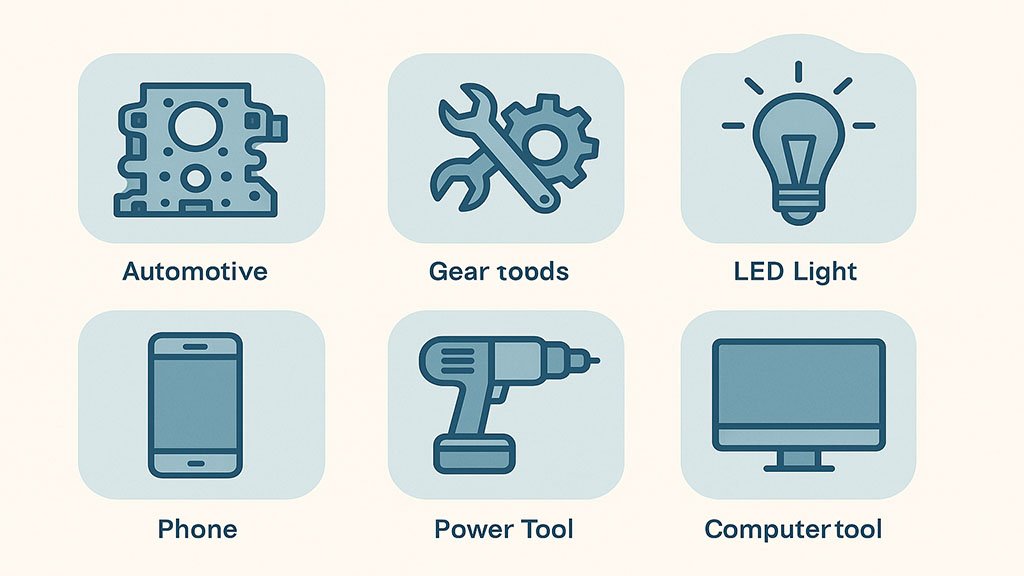
Aluminium die casting is used across a wide array of industries. Some key applications include:
Die-cast aluminium parts are found in engines, transmissions, and structural components of vehicles. These parts help reduce vehicle weight and improve fuel efficiency without sacrificing safety or performance.
Die casting is used to manufacture heat sinks, enclosures, and housings for various electronic devices. Aluminium’s thermal conductivity ensures that devices remain cool and perform efficiently.
From kitchen appliances and power tools to lighting fixtures and smartphones, aluminium die casting allows designers to create sleek, durable products with a premium feel.
Precision and hygiene are paramount in the medical field. Die-cast aluminium components are used in diagnostic devices, surgical tools, and imaging equipment, offering strength and cleanliness in critical environments.

With advancements in technology, aluminium die casting is becoming even more efficient and precise. Innovations in simulation software, automation, and material science are driving the industry forward, allowing for even greater design flexibility and shorter production timelines.
As industries push for more sustainable and lightweight solutions, aluminium die casting is expected to play an increasingly important role. The demand for electric vehicles, for instance, is accelerating the need for lightweight aluminium parts to maximize battery performance and vehicle range.
When it comes to aluminium die casting, the quality of the final product depends significantly on the expertise and technology of the manufacturer. For businesses seeking reliable and high-quality aluminium die casting solutions, partnering with a trusted manufacturer is essential.
OME Verma Industries is one of the leading aluminium die casting manufacturers in India, renowned for its commitment to quality, innovation, and customer satisfaction. With state-of-the-art facilities and a highly skilled team, OME Verma Industries delivers precision-engineered components that power the products of tomorrow.
Whether you’re developing cutting-edge electronics, automotive parts, or industrial machinery, OME Verma Industries is your trusted partner for all aluminium die casting needs.